Nobody Is Coming to Teach You (And That Is Fine)
This lesson is being produced in multiple formats. The lesson itself is the same in each one, so pick whichever suits your context right now. Formats still in production are marked below.
The fastest way to learn something is usually to have an expert sitting next to you. A tutor who answers your exact question. A mentor who tells you which mistake you are one step away from making. That works, and it is not a myth. Any course that pretends otherwise is being dishonest to make itself sound more necessary.
So this lesson starts by taking the expert seriously, then explains why you cannot rely on having one, and then, most importantly, what you can build instead.
1. A Quick Recall of the Line
The opening lesson of this module drew the line, and this lesson sits directly on top of it, so it is worth restating in a paragraph.
Hiring an expert means paying for someone's time so that they take part of the teacher's job back off you. A tutor by the hour, a paid coach, a mentor on a retainer, a schoolteacher, a university professor. You buy their hours, through fees or tuition or taxes, and a share of the responsibility for your progress goes with them. Everywhere else you are still your own teacher, including on the courses you pay for and including when generous people help you for free, because in those cases the job never left your hands.
One consequence of that is worth pausing on, because it ties this lesson to the two before it. Formal education is the hired-expert model, delivered to millions of people at once. That is precisely why it carries the limits described in the lesson on formal education: the teacher is accountable for the class, not for you, and no single person can hold thirty individual accountabilities at the same time. The expert is real. Their attention is simply divided by the number of students in the room.
2. What an Expert Actually Gives You
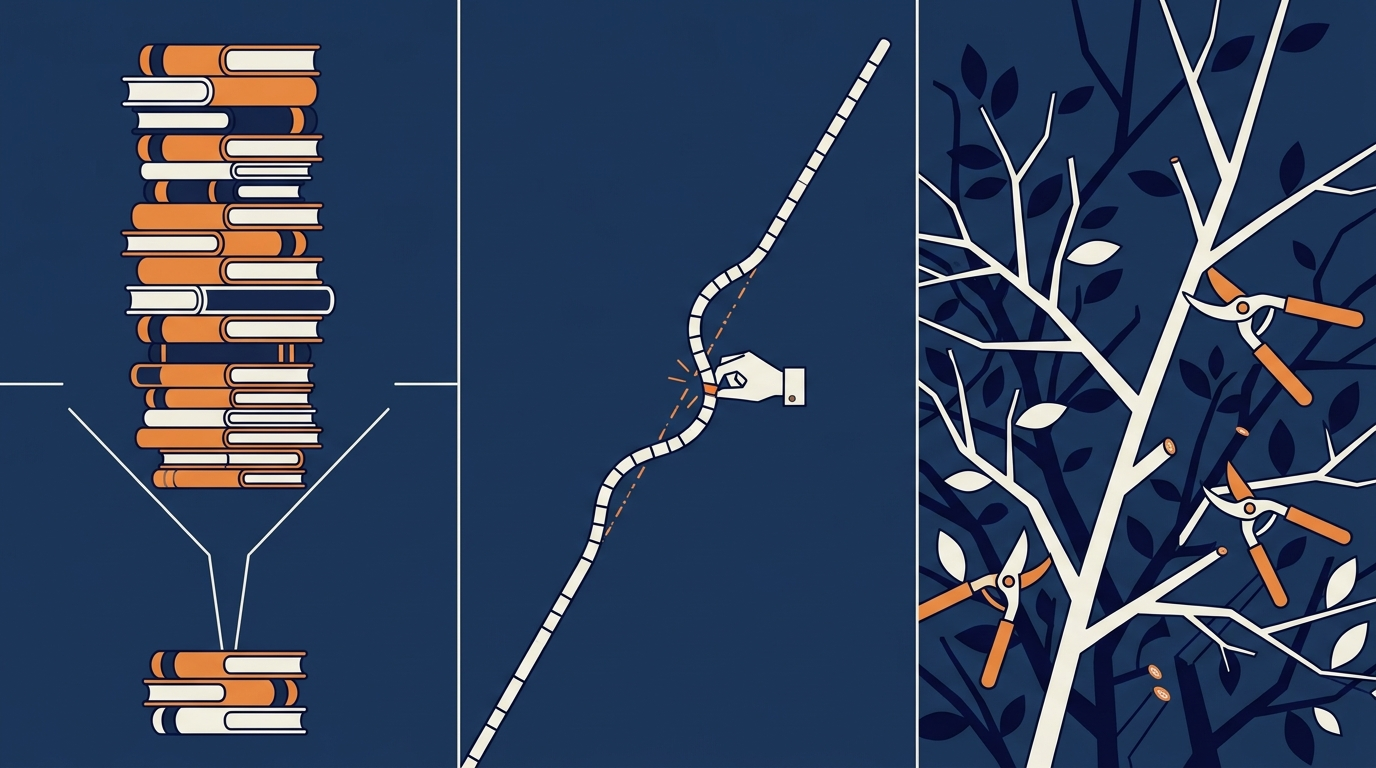
It is worth being precise about this, because once you know what an expert provides, you can start sourcing those things another way. There are three:
- Compression. An expert has already read the twenty things you would have to read, and can tell you which three actually matter. They save you time you would not even know you were wasting.
- Correction. They see your mistake while it is small. Left alone, you would build on top of that mistake for six months before discovering it, at which point fixing it is expensive.
- Pruning. They tell you what to ignore. Beginners drown in options, and most of the cost of learning alone is spent on paths that a knowledgeable person would have waved you away from in one sentence.
Notice that none of these is "knowing the material". The material is in books, documentation, and videos, most of it free. What you are actually buying from an expert is judgement about the material.
Which leads to a piece of advice this course is not going to dress up: if you have the money, hire the expert. Pay for the tutor. Book the session. Buy an hour of a real person's attention when you are stuck, and bring your actual work to it. It will save you time, and time is the one resource in this entire subject that you cannot manufacture more of.
There is nothing more admirable about working something out alone over a year when a mentor could have told you in an afternoon. That is not virtue, it is just a more expensive way to pay, in the currency that actually matters. If you can shorten the path, shorten it.
3. Why You Cannot Count on Having One
Paid expert time is expensive and there is not very much of it. A good tutor costs real money per hour, and learning a field takes hundreds of hours. Multiply those two numbers and you get a figure most people cannot justify, even when they can technically afford it. For most people, most of the time, the paid expert is simply not on the table.
It is worth being blunt about what decides this, because the previous section's advice quietly assumed something. Access to experts tracks money.
Notice how unevenly that falls. Material is cheap now and getting cheaper: courses, documentation, books, and video are within reach of almost anyone with a connection, and much of it is free. Paid professional attention has not become cheaper at all, because it is somebody's hour and there are only so many of those.
So if you can pay for hours of a professional's attention, or you grew up around people who already do the thing you want to do, your path is shorter, and you did not earn that head start. For a great many people, and especially for anyone who is not wealthy, self-learning is not one option among several. It is the only door that is actually open.
That is the real reason this matters: not because teaching yourself is philosophically superior, but because for most of the world it is the only route available, and it therefore needs to be good enough to work.
And there is a second limit, one that catches even the people who can afford it. Every serious learner eventually reaches the edge: the question nobody has answered yet, the problem where you are the most qualified person in the room, the situation specific enough that no general advice applies. At that edge there is nobody left to ask, at any price.
Teachers and professors run out on a schedule, which is the most predictable version of this. You have them for a fixed number of years, and then you graduate and the arrangement simply ends, typically four decades before your need to learn new things does.
So the paid expert is not a permanent solution for anyone. It is an accelerator at the start, and it runs out.
All of which sounds bleak, and it would be, except that the most valuable thing an expert offers turns out not to be for sale in the first place. Plenty of people give it away.
4. You Can Often Get It for Free, If You Know How to Ask
Here is what the title of this lesson can make you miss, and it is one of the best things about learning in the open.
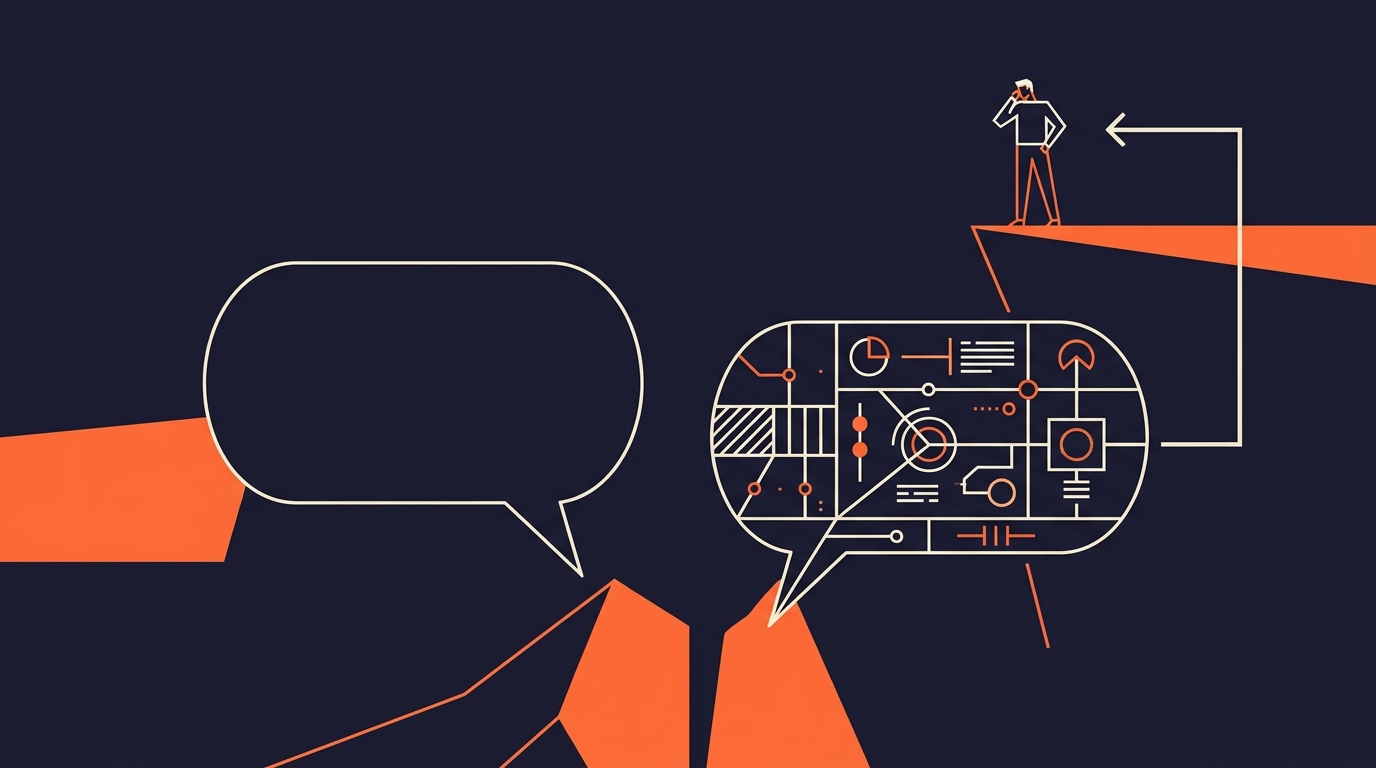
There are a lot of generous people out there. Experienced practitioners answer questions in communities and forums for nothing. People reply to a well-written message from a stranger. Someone senior will look at your work and tell you what is wrong with it, not because they are being paid, but because somebody once did the same for them, or simply because they like the subject and enjoy talking about it with anyone who is genuinely interested.
This is not rare. Free help from experienced people is one of the most underused resources available to a self-learner, and the reason it stays underused is simple: most people never ask, or they ask badly.
Asking well is a skill, and like any skill it can be learned:
- Do the work first. Show what you already tried and where it broke. The difference in response rate between "how do I do this?" and "I tried this, expected that, got something else, and here is what I have already ruled out" is enormous.
- Ask something specific. A narrow question can be answered in two minutes. "Will you be my mentor?" asks for an open-ended commitment of unknown size, and most people decline out of caution, even when they would happily have answered your next five questions.
- Respect their time. Be brief. Say why you are asking them in particular. Make it obvious that no is a perfectly fine answer, and mean it.
- Be worth helping. Act on what you are given and come back with the result. People help those who use their advice, and nothing turns a single answer into an ongoing relationship more reliably than showing someone their two minutes were not wasted.
- Be findable. Write about what you are learning, publish your work, take part in the places where practitioners gather. Luck can only find people who can be found.
There is real luck in this. Sometimes you meet exactly the right person at exactly the right moment, and no technique manufactures that. But you can put yourself in the path of that luck far more often than most people ever do, and asking well is most of how.
Note what this does not change. Free help is still self-learning. Nobody owes you their hours, nobody is tracking whether you improved, and nobody will chase you if you stop. You are still the one steering. You are simply steering with much better information, and you got it for the price of a good question.
5. How This Went for Me
I have been teaching myself tech since 2017. I do not hold a bachelor's degree in the field. I eventually reached a senior position, and the reason was not talent and it was not luck. It was that I could learn things faster than my situation could break them.
One detail matters more than the rest, because it is this entire lesson compressed into a single fact: in all that time, I have never paid for a coach or a mentor. Not once.
That does not mean I did it alone. I have had a great deal of help from mentors over the years, all of it freely given, and I am genuinely grateful for it. People spent time they did not owe me answering questions, looking at my work, and telling me when I was heading in the wrong direction. That help mattered, and I am not going to pretend otherwise to make the story sound more heroic.
But none of it was purchased. So when I say this is possible, I am not describing a theory. You can learn entirely on your own, without ever paying anyone for their expertise, and still get where you wanted to go.
None of that contradicts the advice a few sections ago. If you can pay to shorten the path, pay. I simply never could, and it turned out not to be the barrier I had feared it was.
I do want to be honest about the price I paid instead, because a story that shows only the finish line does not teach anybody anything.
It took years, and a lot of those years were spent inefficiently. I started on the wrong topic more than once, picking something advanced because it looked impressive, then discovering I was missing three things underneath it. I tried to run before I could crawl, and every time I did I paid for it twice: once going forward without the foundation, and once going back to learn what I had skipped.
I also did not just read. I tried almost everything I could think of: courses, documentation, asking a mentor whenever I could find one, experimenting, and deliberately breaking things to see what would happen. Some of what I learned from turned out to be wrong, and I could not tell it was wrong until much later, because I did not yet know enough to judge what I was being told. I built things badly and then rebuilt them, and the rebuilding is where most of the actual learning happened.
It cost evenings and weekends. And there were long stretches where I had no idea whether any of it was working, which is the part nobody warns you about.
What I want you to take from that is not "you can do it too" as a slogan. It is the shape of the trade.
6. The Three Real Costs of Teaching Yourself
Self-teaching is usually far cheaper in money, even when you buy courses and books, and more expensive in three other currencies. Know them in advance so they do not surprise you:
- Wrong turns. Without someone pruning your options, you will spend time on things that lead nowhere. This is unavoidable and you should budget for it rather than treat each one as a failure.
- No feedback signal. In school, a grade tells you where you stand. Alone, nothing does. You can feel like you are progressing while standing still, and you can feel lost at the exact moment you are learning fastest. Both are common.
- The confidence problem. You do not know what you do not know. That is not a clever phrase, it is the central practical difficulty of learning without a teacher, and most of the method in this course exists to work around it.
7. Building Your Own Substitutes
Here is the useful part. Each thing an expert provides can be sourced another way, at lower cost and more effort.
- Instead of compression: a well-made course or book is exactly this, bought secondhand. Someone already did the filtering and left you the result. Prefer material written by people who actually do the work, and treat agreement between several independent sources as the filtering an expert would have done for you.
- Instead of correction: build something real and let reality correct you. Reality is a slower teacher than a mentor, but it is free, it is always available, and it never flatters you. A thing that does not work is unambiguous feedback.
- Instead of pruning: find the communities where practitioners argue with each other. You are not there for answers. You are there to learn which questions are considered worth arguing about, which is exactly the judgement you lack.
- For the confidence problem: explain what you have learned to someone else, or write it down as if you were teaching it. The gaps show up immediately and they are impossible to talk your way past.
None of these is as good as an expert at your elbow. Together they are good enough, and they are available to you today, at no cost beyond your attention.
8. What You Gain That a Taught Student Does Not
So far this has read like a list of disadvantages you have to work around. There are two things you get in exchange, and they are worth more than they sound.
You develop judgement. When someone hands you a curriculum, you are told what matters and in what order, and you never have to decide. Teaching yourself, you make that call constantly: what to learn next, which source to trust, when something is good enough to move on from, when to abandon a path. You will get many of those calls wrong at first. But choosing badly and living with the result is the only way judgement is ever built, and it is the exact thing you were buying from the expert in the first place. Nobody can hand it to you. You can only accumulate it.
You learn humility, because you cannot avoid it. A student who passes a course finishes with a clean feeling of completion: the syllabus is done, the box is ticked. Teach yourself for a while and that feeling becomes unavailable to you. You see how much there is that you have not touched. You watch things you were confident about turn out to be wrong. You find out that the amount you will have to re-learn is larger than the amount you learned the first time.
That is uncomfortable for a few years, and then it turns into an advantage. People who know how much they do not know ask better questions, check before they assert, and change their minds without it costing them anything. They are also much harder to mislead, because they are not defending a picture of themselves as someone who already knows.
9. The Shape of the Trade
Almost everything a formal path offers is available to you for a far more reasonable fee, if you know how to learn and you stay honest with yourself about what you actually understand.
You are not getting it for free. You are paying with effort and with method instead of with money. That is a genuinely better deal for most people, but it is a deal, not a shortcut, and anyone describing it as a shortcut has not done it.
10. Why This Is the Sustainable Option
There is a last argument, and it is the one that matters most over a lifetime.
You will need to learn new things for the next thirty or forty years. Not once, not for one qualification, but continuously, as the previous lesson described. No budget covers thirty years of experts. No employer funds it indefinitely. No institution stays relevant that long.
The expert is a resource you might have. Your own ability to teach yourself is a resource you always have, and it is the only one that scales across an entire working life.
Takeaway: Nobody is obliged to teach you, and that is survivable. Everything a paid expert provides can be rebuilt from cheaper parts, and a surprising amount of it people will hand you for nothing if you ask well. What makes self-teaching valuable is not that it is free. It is that it never runs out.