What It Means to Become Your Own Teacher
This lesson is being produced in multiple formats. The lesson itself is the same in each one, so pick whichever suits your context right now. Formats still in production are marked below.
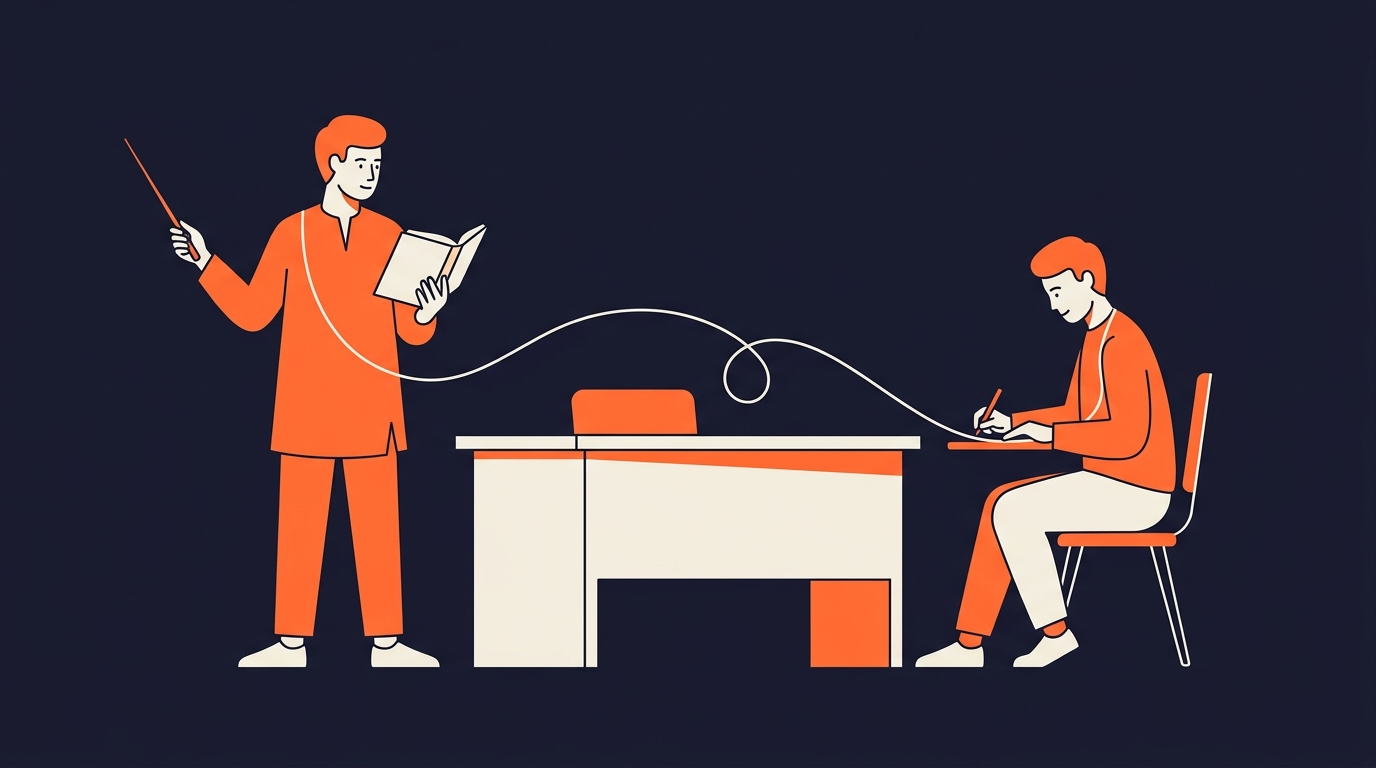
This course is called How to Become Your Own Teacher. That phrase is the definition, not a slogan.
Before any argument about why this matters, we need to be precise about what it means, because the idea gets misunderstood constantly, and the misunderstanding is not harmless. Most people picture a lone figure in a room with a stack of books, no teacher, no help, and no money spent. That picture is wrong, and if you carry it into the rest of this course you will draw the wrong conclusions from everything that follows.
1. Two Names for the Same Thing
You will see several words used for this: self-learning, self-teaching, self-directed learning, and becoming your own teacher. In this course they all mean the same thing, and you can treat them as interchangeable.
But "becoming your own teacher" is the more accurate one, and it is worth preferring, because it says what actually changes.
"Self-learning" sounds like a statement about who is in the room: you, by yourself, nobody else. That is not what it means. Becoming your own teacher is a statement about who is holding the job, and the job does not stop existing just because no one was hired to do it.
2. What a Teacher Actually Does
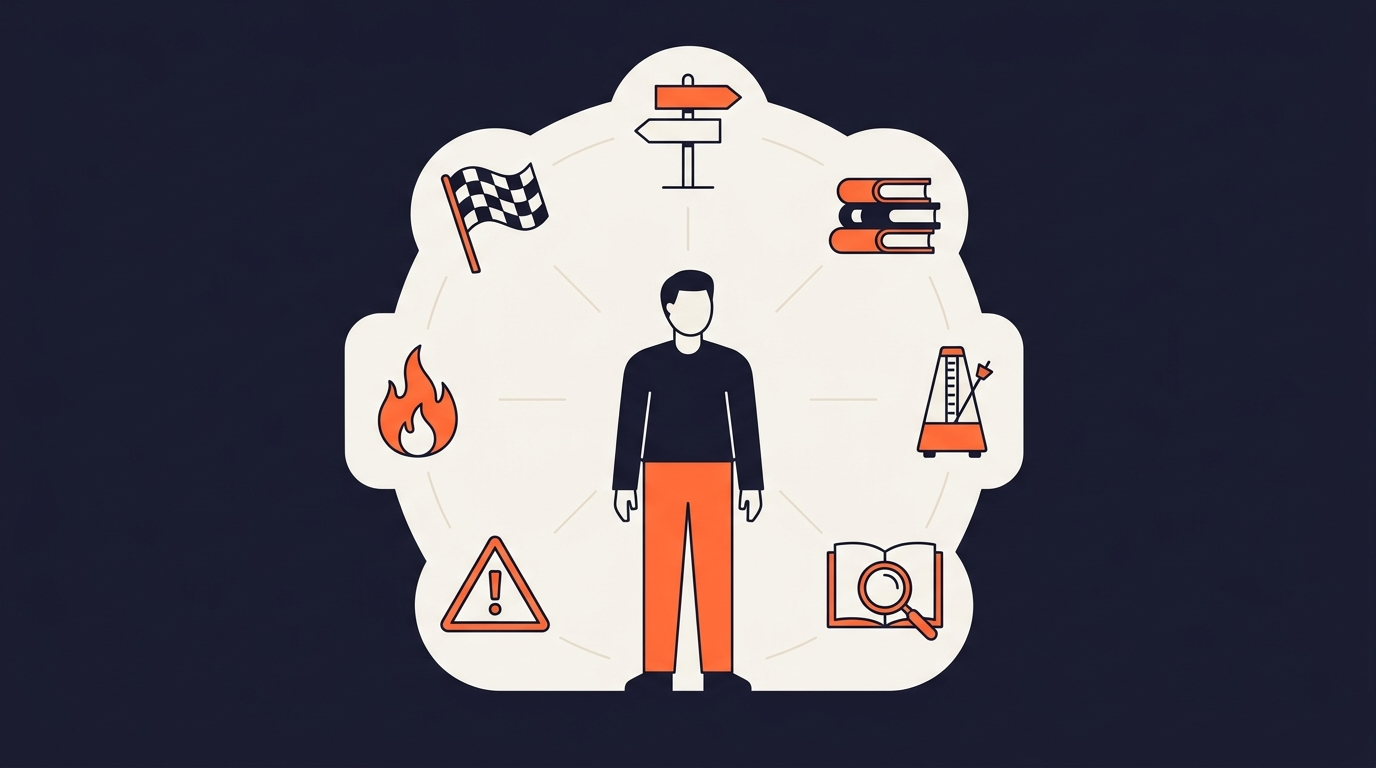
To take a job over, you have to know what the job is. Strip away the classroom and a teacher does seven things:
- Decides what you learn, and in what order.
- Chooses the materials you learn it from.
- Sets the pace, and decides when it is time to move on.
- Judges whether you actually understood it, as opposed to feeling like you did.
- Notices when you are stuck, often before you notice it yourself.
- Keeps you going when your motivation runs out, through encouragement, consequences, or both.
- Decides when you are done.
Becoming your own teacher means taking over all seven. That is the entire transition. Not learning alone, not learning for free, not refusing help. Taking the job.
Some of those are easy to take on. Deciding what to learn is often a relief. Others are genuinely hard, and it is worth saying which ones now: judging your own understanding, and noticing when you are stuck. Both require you to grade your own work honestly, and both are things you will be bad at to begin with. Much of the method in this course exists to make them possible.
3. The Definition, in One Sentence
Being your own teacher means you are accountable for your own progress.
Nobody else's job depends on whether you get there. That is the whole thing, and everything below follows from it.
4. The One Thing That Falls Outside It
There is exactly one arrangement where you are not your own teacher: hiring an expert. That means paying for someone's time so that they take part of the job back off you.
A tutor you book by the hour. A paid coach. A mentor on a retainer. A schoolteacher standing in front of your class. A university professor running the course you enrolled on. You buy their hours, whether directly, through tuition, or through taxes, and along with those hours you hand over a share of the responsibility for your progress. Getting you there becomes part of their job.
This is not a criticism of that arrangement. It works, it is often the fastest route, and a later lesson argues that you should use it whenever you can afford to. It is simply the one thing this course is not about.
5. What Still Counts (And Surprises People)
Here are five beliefs that make people think they are not their own teacher when they clearly are. The quickest way to see through each one is to notice that a real teacher does exactly the same thing.
"It has to be free." No. A paid online course is you teaching yourself. So is a book you bought, or a subscription to a library of video lessons. Every schoolteacher in the world works from textbooks that somebody paid for, and nobody says they stopped being the teacher. Your money bought material. It did not buy the job.
"It has to be alone." No, and this is the most damaging version. Teachers ask colleagues for advice, attend training, and consult specialists when they hit something outside their depth. None of that makes them not the teacher. You can ask questions, join communities, get your work reviewed, and accept mentorship freely offered. Help you went and found, framed a question for, and decided what to do with is you doing the job well.
"It has to be unstructured." No. Teachers follow a syllabus. If a course has a good one, follow it start to finish. The difference is not the absence of structure, it is that you chose this structure, you can judge whether it is working, and you can walk away from it.
"It means rejecting school." No. You can be enrolled full time and be your own teacher in the same week, and most of the strongest learners are both. School gives you a foundation and a credential. Teaching yourself gives you everything the syllabus had no room for.
"It means having no teachers." No. You will have many teachers: the author of a book, the person who made the video, the stranger who answers your question in a forum at midnight. What you do not have is a teacher who is accountable for you specifically. You are that one. Everyone else is a resource you are using to do the job.
6. The Test
When you are unsure which side of the line something falls on, ask who is doing the three hardest parts of the job:
- Who decided what you would learn next?
- Who decides when it is good enough?
- Who notices, and who minds, if you stop?
If the answer to all three is "me", you are your own teacher, no matter how much you paid or how many people helped you get there.
The third question is the sharpest. In school, someone notices if you stop: there is a register, a grade, a parent, a consequence. Paying a tutor, someone notices, because they are sitting there waiting for you. Teaching yourself, nobody notices but you.
That is simultaneously the freedom and the difficulty, and a large part of this course exists to deal with the second half of it.
7. Why Getting This Right Matters
Because each wrong picture causes a specific and avoidable failure.
If you believe it means alone, you will refuse help that was freely available, ignore communities full of people who would have answered you, and make the whole thing several times harder than it needed to be. Plenty of people spend a year stuck on something a two-minute question would have solved.
If you believe it means free, you will refuse to spend a small amount on a book or course that would have saved you forty hours, out of a principle nobody asked you to hold.
Neither of those is self-reliance. Both are just inefficiency wearing a costume. A good teacher uses every resource available to them. Be a good teacher.
8. You Have Already Done This
One last thing, because "become your own teacher" can sound like a discipline you have to adopt from scratch.
Have you ever looked something up because you needed it for a task? Watched a video to work out how to fix something? Read the manual, searched an error message, or asked someone who knew more than you? In each of those moments you decided what to learn, chose the material, judged when you had enough, and stopped. That is the job. You have been doing it, in small amounts, for years.
The rest of this course is not about starting something new. It is about doing deliberately, and at a far larger scale, what you already do by accident.
Takeaway: Becoming your own teacher does not mean learning in an empty room with no money and no help. It means holding the teacher's job yourself: deciding, choosing, judging, noticing, and keeping going. Materials, help, structure, and other people's teaching are all tools, and a good teacher uses every one of them.